
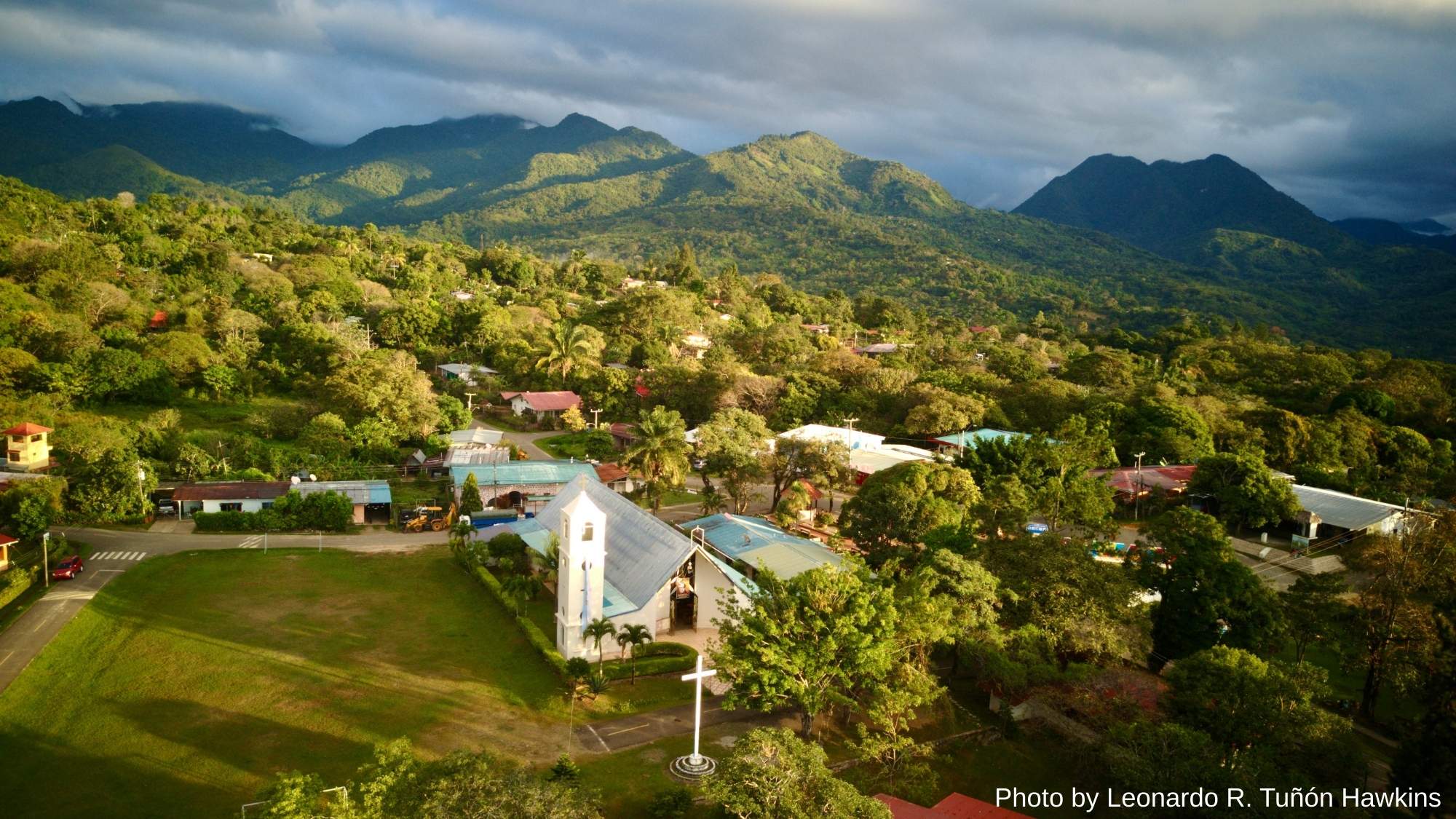
High in the Cordillera Central of Panama lies Santa Fe Veraguas, a quiet mountain town that feels both timeless and alive.
Wrapped by ridges, rivers, and forests, it’s a place where the history of Panama runs deep—woven with Indigenous heritage, colonial struggles, revolutionary voices, and the rhythms of farmers' lives.
For visitors today, Santa Fe is both a doorway to Panama’s natural beauty and a living community that holds on to its roots.
Long before Spanish settlers climbed these hills, the valleys of Santa Fe Veraguas were home to Indigenous peoples. Archaeological traces and oral histories point to the Ngäbe-Buglé, and other groups who moved through these mountains.
While the region was not part of the great empires of the Incas, Aztecs, or Maya, its people were linked through trade routes that stretched across Central America. They carried cacao, salt, feathers, and ceramics between the coasts, leaving a legacy of craftsmanship and cultural resilience.
The warrior Hurracá, still remembered in local lore, symbolizes that spirit of resistance. Stories describe him leading Indigenous fighters in defense of their land, carving his name into the identity of Santa Fe. Even today, Hurracá is not just a legend but a reminder of the courage that shaped this region before colonial rule.
Santa Fe was founded by the Spanish in 1558 as a strategic highland base to explore the Pacific slope and support gold mining on the Veraguas coast. From here, officials coordinated expeditions, moved supplies, and taxed ore moving out of the interior.
By the early 1600s, the boom had cooled. A 1607 visitation report notes that “the mines had failed and the town’s settlers had left,” a stark snapshot of the volatile colonial rush for placer gold in nearby rivers (especially the Santa María basin). Even so, mining persisted across Veraguas through the 1600s; by 1680 there were dozens of small mining hamlets (caseríos mineros) on the map, with Santa Fe repeatedly listed among the settlements tied to gold washing.
Within today’s park, you can still feel that history underfoot. The Chilagre Historic Mine Trail traces the upper Santa María River toward abandoned gold workings, a quiet, mossy walk that puts the old economy in perspective as jungle reclaimed what the rush left behind.
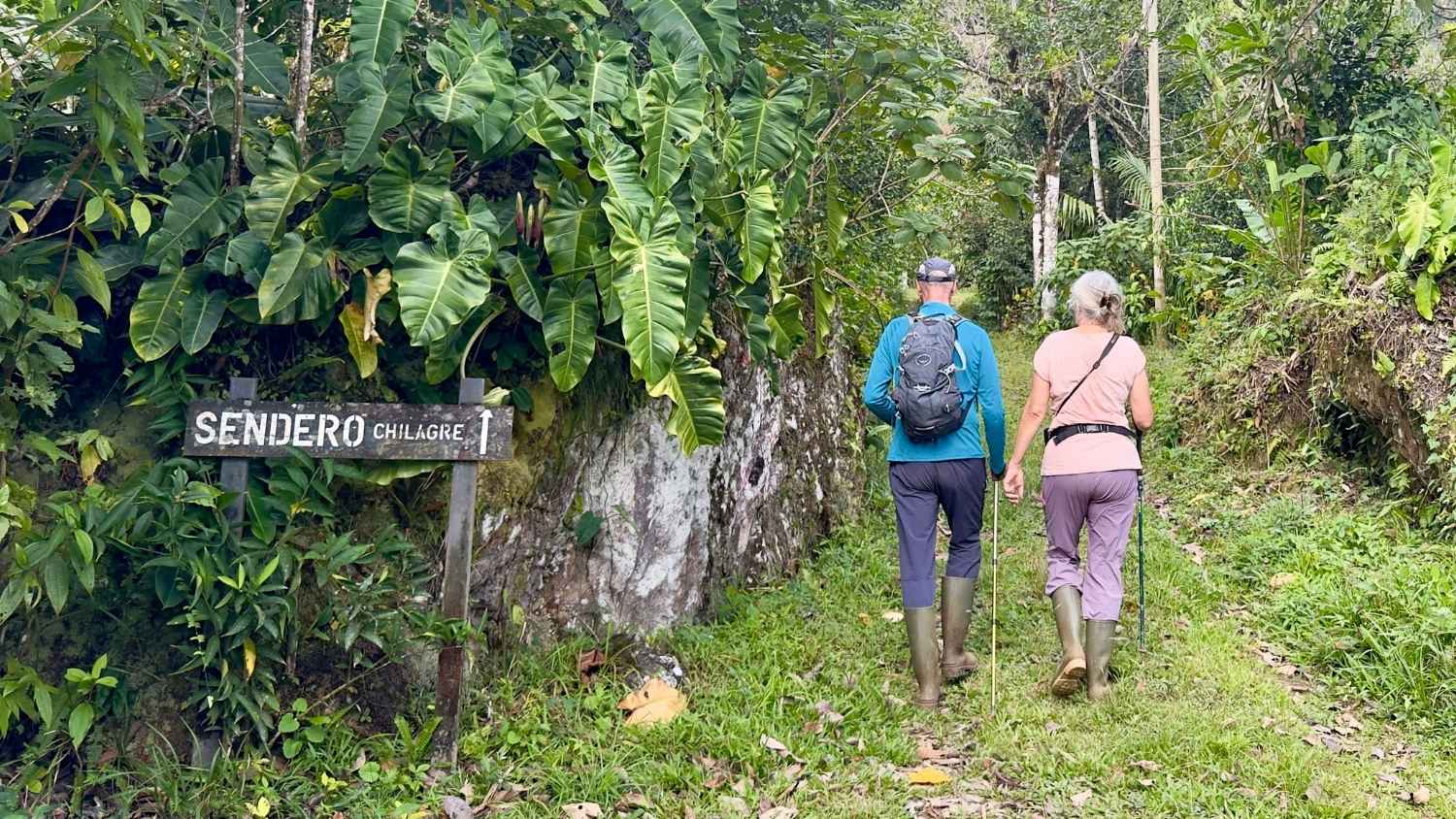
Local trail guides in Santa Fe Veraguas continue to reference this “Sendero Histórico de la Mina de Oro” as a cultural walk as much as a nature route.
In the 1960s, Santa Fe Veraguas entered a new chapter when Father Héctor Gallego, a young Colombian priest, arrived. He didn’t just preach; he lived among the poor, walked the same trails, and listened to their struggles. His mission was empowerment: helping campesinos organize cooperatives, claim fair prices for their crops, and gain dignity in the face of poverty.
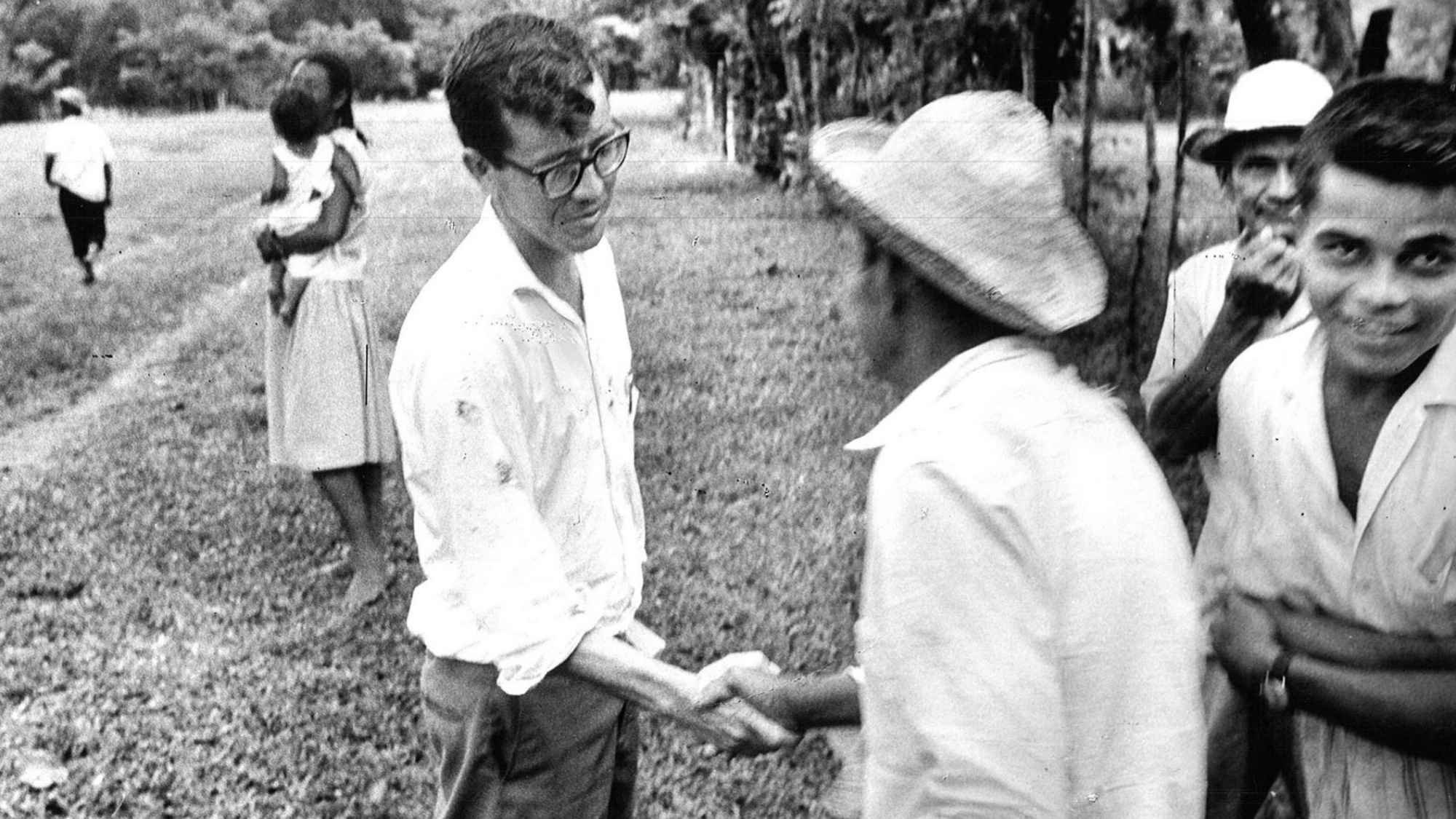
Gallego’s work challenged local elites and the Panamanian military government. In 1971, he was abducted and “disappeared,” a wound that has never fully healed. Yet his legacy remains alive in Santa Fe in the cooperative system that still functions today, in the national park that bears his name, and in the memory of a man who gave voice to the voiceless.
(For readers who wish to dive deeper, we’ll soon share a full article dedicated to Father Héctor Gallego’s life and impact.)
Santa Fe is also tied to the memory of Cerro Tute, a ridge that became a battleground in the 1960s when student rebels clashed with the Panamanian National Guard. For many Panamanians, the events at Cerro Tute symbolize both youthful idealism and the harsh repression of the era. Today, the mountain is a hiking destination, but it also carries a quiet reverence as a place of history and sacrifice.
The Indigenous warrior Huracá, the campesinos guided by Gallego, and the students of Cerro Tute all echo a shared story: Santa Fe is a place where resistance and resilience meet.
Santa Fe Veraguas has always been rooted in agriculture. Small-scale farms produce citrus fruits such as oranges, mandarins, and limes that make their way to markets in Santiago and beyond. Coffee production remains modest, but deeply tied to local pride, especially through the cooperative system and the small factory Café El Tute, which processes beans from surrounding farms.
Alongside farming, tourism has become an emerging part of the economy. Although still relatively small and quiet compared to other destinations in Panama, it provides income for local families through guiding, small hostels, and local eateries.
After the interruption of COVID-19, tourism never returned to its earlier pace, yet it continues to grow slowly in ways that feel authentic and community-based. Santa Fe is not a mass-tourism hub, and perhaps that is its strength—it remains a village where agriculture is the backbone, and tourism adds gentle support.
Tourism here is unhurried. There are a handful of family-run hostels, guesthouses, and fondas that welcome visitors, but you won’t find large resorts or package tourism. Many visitors come for the waterfalls, the quiet trails, and the cooler mountain climate.
Others come for birdwatching, artisanal music, or to spend time in the nearby national parks.
The beauty of Santa Fe’s tourism is that it remains low-impact. For travelers, this means an experience that feels personal and connected, not staged or crowded. For locals, it provides an additional livelihood that complements, rather than replaces, agriculture.
Santa Fe Veraguas is uniquely placed between two protected areas:
These parks anchor Santa Fe in Panama’s broader network of protected areas, reminding us that conservation here is not just about forests but also about people and their stories.
The Santa María River, Panama’s third largest, flows through Santa Fe before winding its way to the Pacific. Its clear pools and waterfalls are favorite swimming spots for locals and visitors, but its role is much larger. It irrigates farms, nourishes forests, and sustains entire communities downstream.
For Santa Fe, the river is both livelihood and soundtrack. At night, its steady rush can be heard from homes and campsites alike, carrying with it a sense of permanence in a changing world.
Santa Fe’s people live in close relationship with nature. Campesino farmers, Indigenous Ngäbe-Buglé neighbors, and small-town families share the land in ways that blend agriculture with forest life. Unlike other regions where lines are sharply drawn, here coexistence feels organic.
At Yodavida, we see ourselves as part of that landscape—a project that works with local certified guides to create hiking experiences that connect travelers with both nature and local community. Our role is not to impose but to facilitate: to help visitors walk respectfully, to open paths that locals have always used, and to bridge cultures through shared journeys.
Santa Fe is also alive with culture. Traditional tipico music and dances mark fiestas and gatherings, connecting generations through rhythm and movement. The artisanal tradition of weaving the sombrero pintado—a finely crafted straw hat made in the surrounding hills—is another cultural emblem, still practiced by skilled hands.
Music and crafts here are not performances for visitors; they are part of daily life. For travelers, to join a fiesta or watch a weaver at work is to glimpse the living heart of Santa Fe’s culture.
Life in Santa Fe is still simple, marked by the rhythm of farming, cool mountain air, and quiet evenings where roosters, dogs, and the river take the place of traffic noise. Visitors quickly notice that the pace is unhurried: people greet you in the street, horses still clop along the road, and the central market hums with the day’s fruit and vegetables.
Getting here is also easier than it once was, the road from Santiago is being upgraded with new asphalt, reducing the travel time from the capital. And just a few years ago, the rough seasonal track from Santa Fe to Calovébora on the Caribbean was paved for the first time, cutting across Santa Fe National Park and linking the highlands with the sea. The result is a town more connected than in the past—yet still remote enough to feel worlds away from Panama City.
Santa Fe is about 5–6 hours by road from the capital. It’s far enough to feel remote, but close enough to reach in a single day’s travel. The main route is the Pan-American Highway to Santiago, then north into the hills.
And if you’d like to know more or check availability, just click the WhatsApp icon on the bottom of the page and chat with us directly — we’ll give you a quick answer.
Want more details on buses, private transfers, and practical advice for moving around the country? Check our article Panama Travel Tips for a full guide to getting around smoothly.
At Yodavida, we are helping Santa Fe grow as a true destination for meaningful outdoor experiences. While hiking is our core passion—leading travelers through jungle trails, across rivers, and to remote waterfalls—we also offer other activities that connect you with the life and culture of these mountains. Every outing is guided by our team of certified local guides ensuring both safety and deep knowledge of the land.
What you can experience with us:
Whatever you choose, you’ll find that each experience is designed to create authentic connections—with nature, with the community, and with yourself. And if you’re not sure which activity fits you best, just tap the WhatsApp icon—we’re happy to help you plan.
Camping La Mula is more than a campsite—it’s a simple and welcoming base where travelers can stay close to both the trails and the community. Just across a pedestrian bridge, the site feels like another world: the Santa María River flows nearby, birds call from the canopy, and evenings settle quietly under the stars.
What you’ll find at Camping La Mula:
Here, mornings begin with oropendolas in the trees, toucans drifting over the valley, and the forest waiting just beyond your tent. Whether for one night or several, Camping La Mula keeps you close to the rhythm of Santa Fe and its people.
Santa Fe Veraguas is more than a mountain village—it is a meeting point of history, culture, and nature. From Indigenous warriors and revolutionary priests to citrus farmers and musicians, its story is as rich as its landscapes. For travelers, Santa Fe Veraguas is not just a stop on the map but a place to pause, to listen and to learn.
Whether you come for the waterfalls, the music or the quiet hospitality, you’ll leave with something more: a sense of connection to a community that has endured through centuries and to the forests and rivers that still shape its life.