
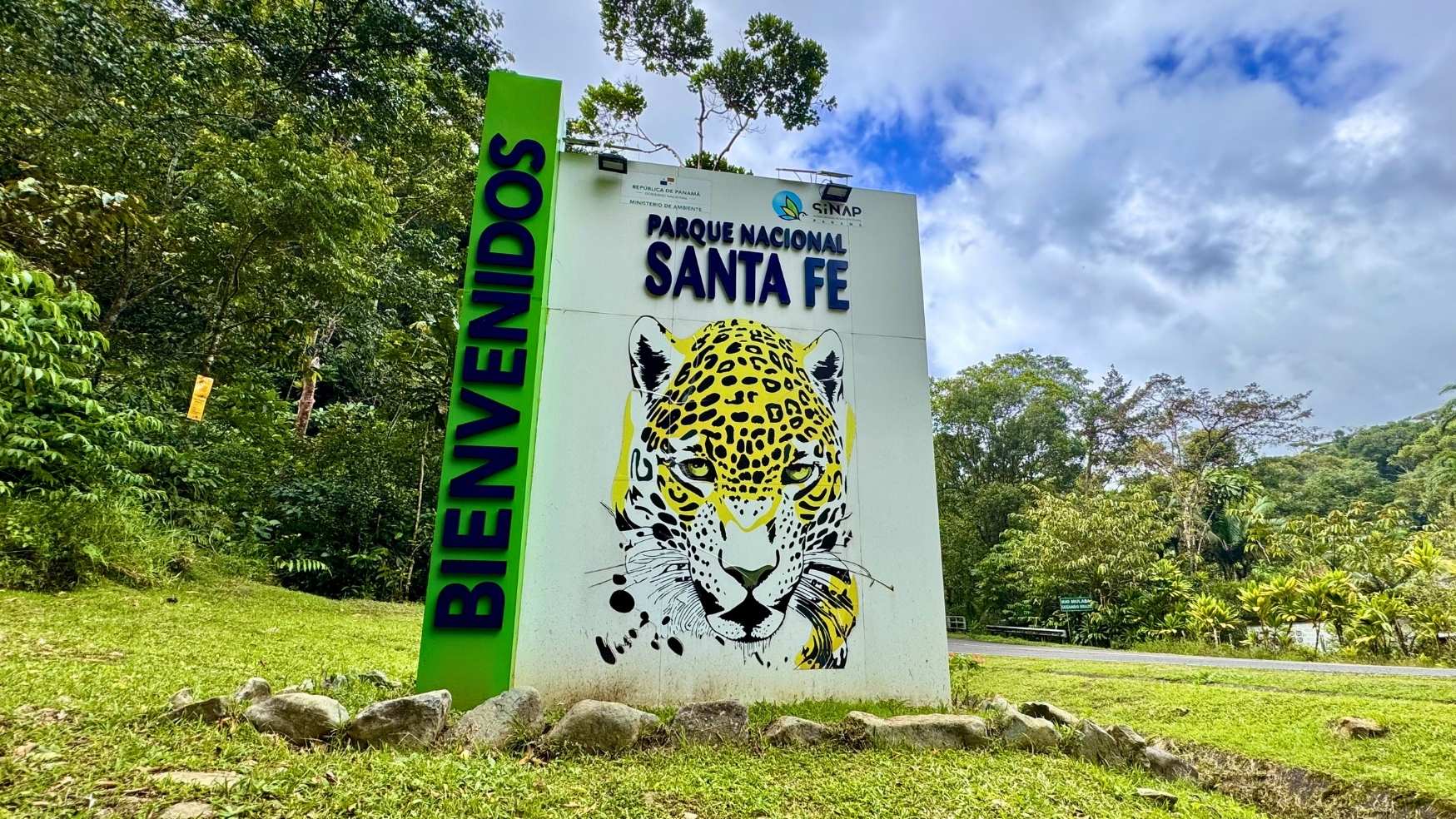
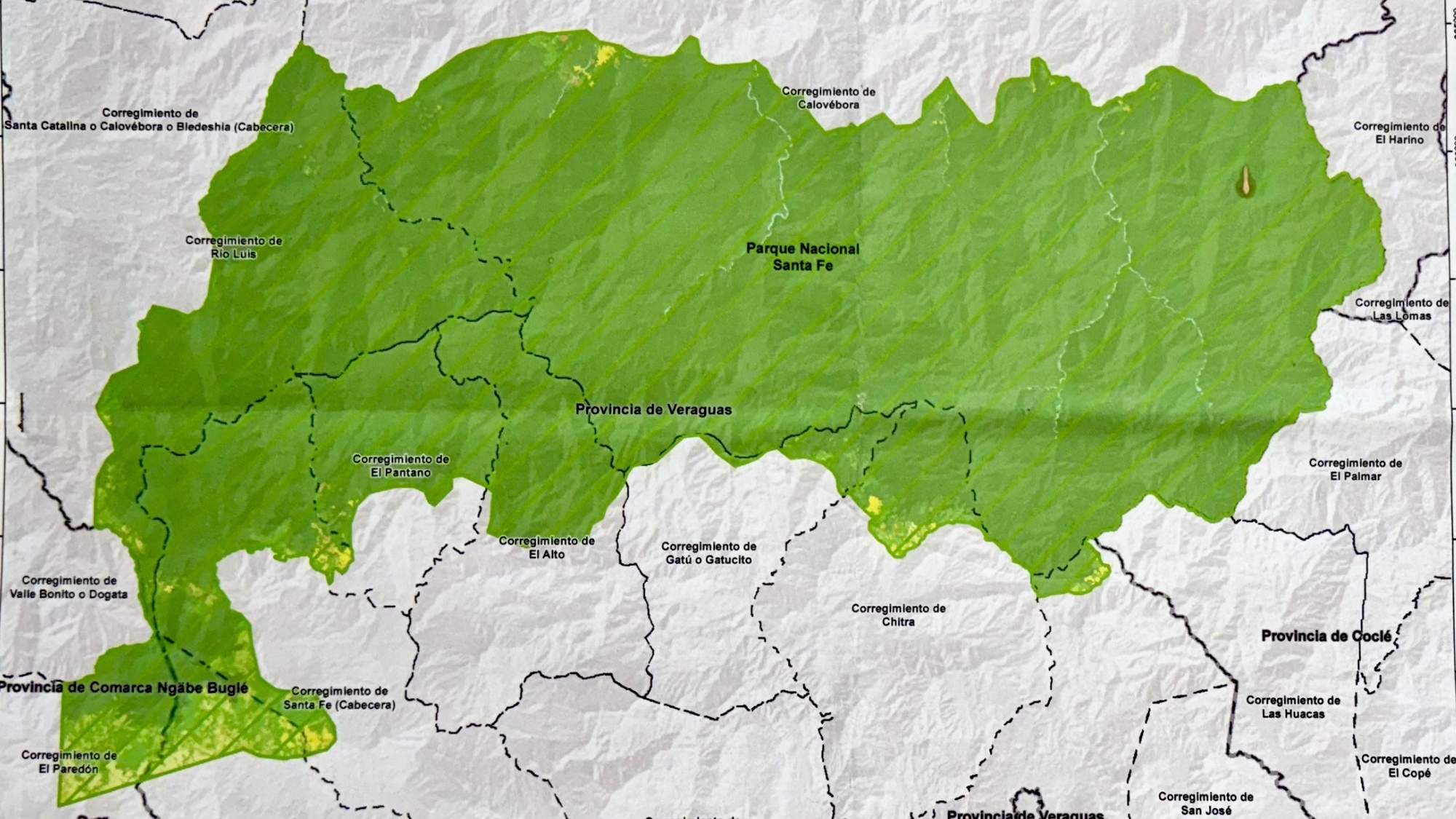
Santa Fe National Park is one of Panama’s least-known treasures, yet for those who reach it, it feels like stepping into a secret country. High in the mountains of Veraguas, spanning 72,636 hectares (over 700 km²), it gathers together waterfalls, cloud forests, and ridges that touch the sky.
For visitors, this is not simply a park on a map; it is a living refuge where biodiversity still thrives and where small farming communities continue to share the land much as they have for generations, making Santa Fe National Park a remarkable destination to explore.
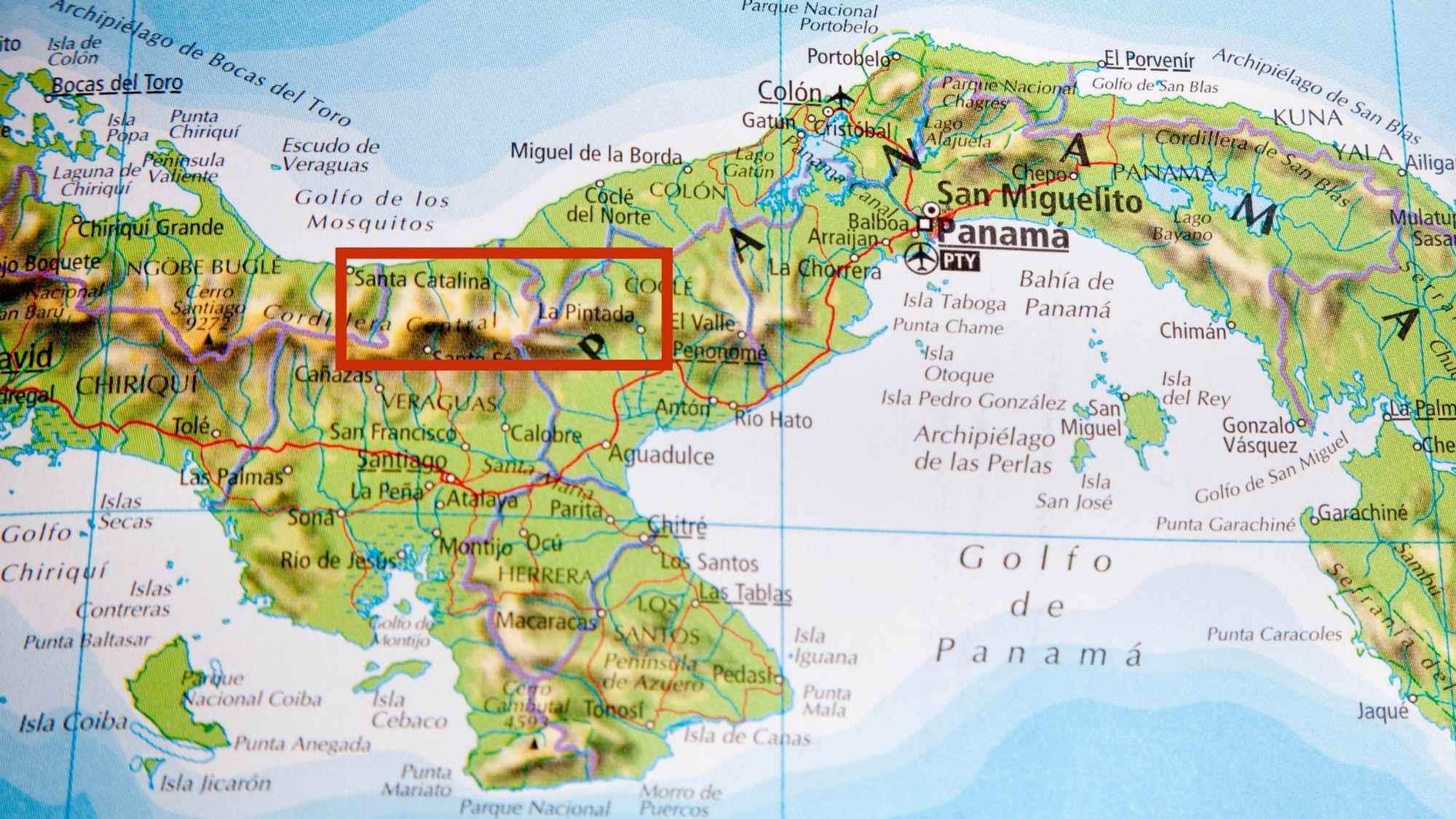
Created in 2001, it remains relatively new in Panama’s conservation history, yet its impact is already enormous. It protects the watersheds of the Santa María, Calovébora, and Veraguas rivers, supplies drinking water to nearby towns, and forms a crucial link in the Mesoamerican Biological Corridor, the ecological bridge that connects Central and South America. To walk here is to see Panama’s role as a crossroads not only of cultures, but of species themselves, enhancing the importance of Santa Fe National Park.
The park was officially established by executive decree in December 2001, born from decades of local advocacy for protecting Veraguas’ highlands. Covering an area almost the size of New York City, it spreads across mountain ranges that divide the Caribbean and Pacific watersheds. Within its valleys, rivers run in every direction: eastward toward the Caribbean, south toward the Pacific, and inward to supply the fertile farmlands of Veraguas.
This dual role is central to why Santa Fe National Park matters. Farmers in the lowlands rely on its rivers for irrigation. Hydroelectric plants depend on its steady flows. Even Panama City, hundreds of kilometers away, benefits indirectly because these mountain forests regulate rainfall and stabilize the climate, showcasing the vital contributions of the park to the region.
When you look at the ridges of Santa Fe Veraguas, often veiled in mist, you are also looking at the infrastructure of life: trees that filter water, soils that prevent erosion, roots that anchor the slopes. For Panama, the decision to protect this land was as practical as it was ecological, further emphasizing the significance of Santa Fe National Park.
Santa Fe National Park shelters some of the most diverse ecosystems in Panama, ranging from evergreen forests to cloud-kissed ridges and river valleys. Its vegetation is dominated by towering hardwoods like Terminalia amazonia, Carapa guianensis, and Virola species, while orchids such as Oncidium flourish in the canopy, adding delicate bursts of color.
With nearly 300 recorded species, birdwatching here is exceptional:
Santa Fe is also a haven for herpetofauna, including both common and endemic species:
Santa Fe’s biodiversity shows why the park is considered a living refuge. From jaguars to hummingbirds, from orchids to glass frogs, it offers a window into Panama’s natural heritage that remains partly unknown and still under study.
Want to dive deeper? Read our full article on Biodiversity in Panama to explore how Santa Fe National Park fits into the country’s ecological mosaic.
Behind the beauty of Santa Fe protected areas lies the constant work of a small team of rangers. With only seven or eight staff responsible for patrolling a vast expanse of forest, their role is both essential and demanding. They move through rugged terrain on foot or horseback, checking trails, rivers, and remote ridges where few visitors ever pass. Their vigilance is what allows this protected area to remain a refuge for wildlife and water sources.
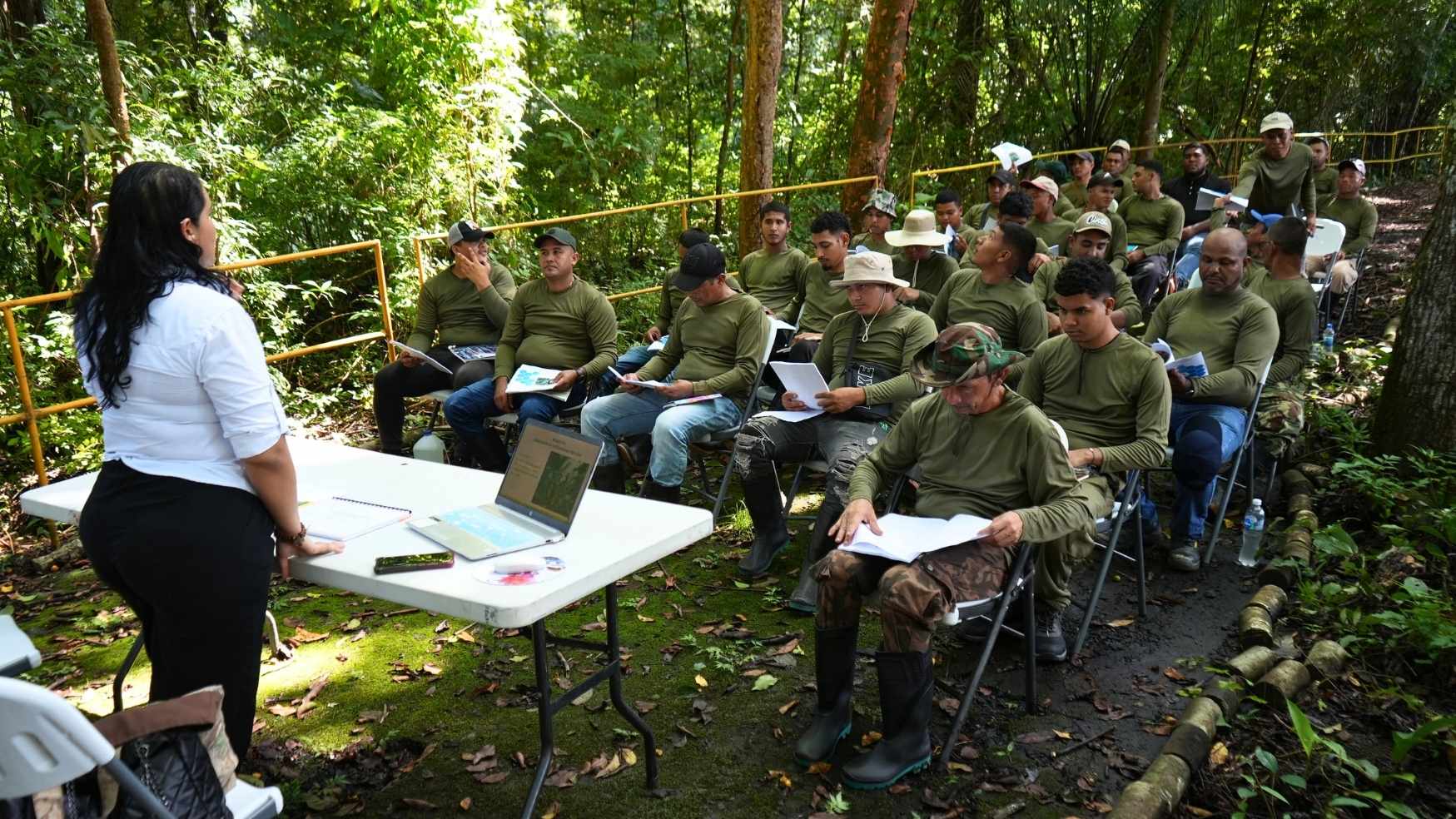
The challenges they face are significant:
Despite limited resources, these rangers act as the frontline defenders of Panama’s highland biodiversity. Their presence discourages illegal activity and reminds communities and visitors alike that the park is not just scenic land but a living system that requires constant protection.
Santa Fe National Park is not only a refuge for forests and wildlife but also the birthplace of some of Panama’s most important rivers. Six major watersheds rise in these highlands connecting the park to both the Caribbean and the Pacific.
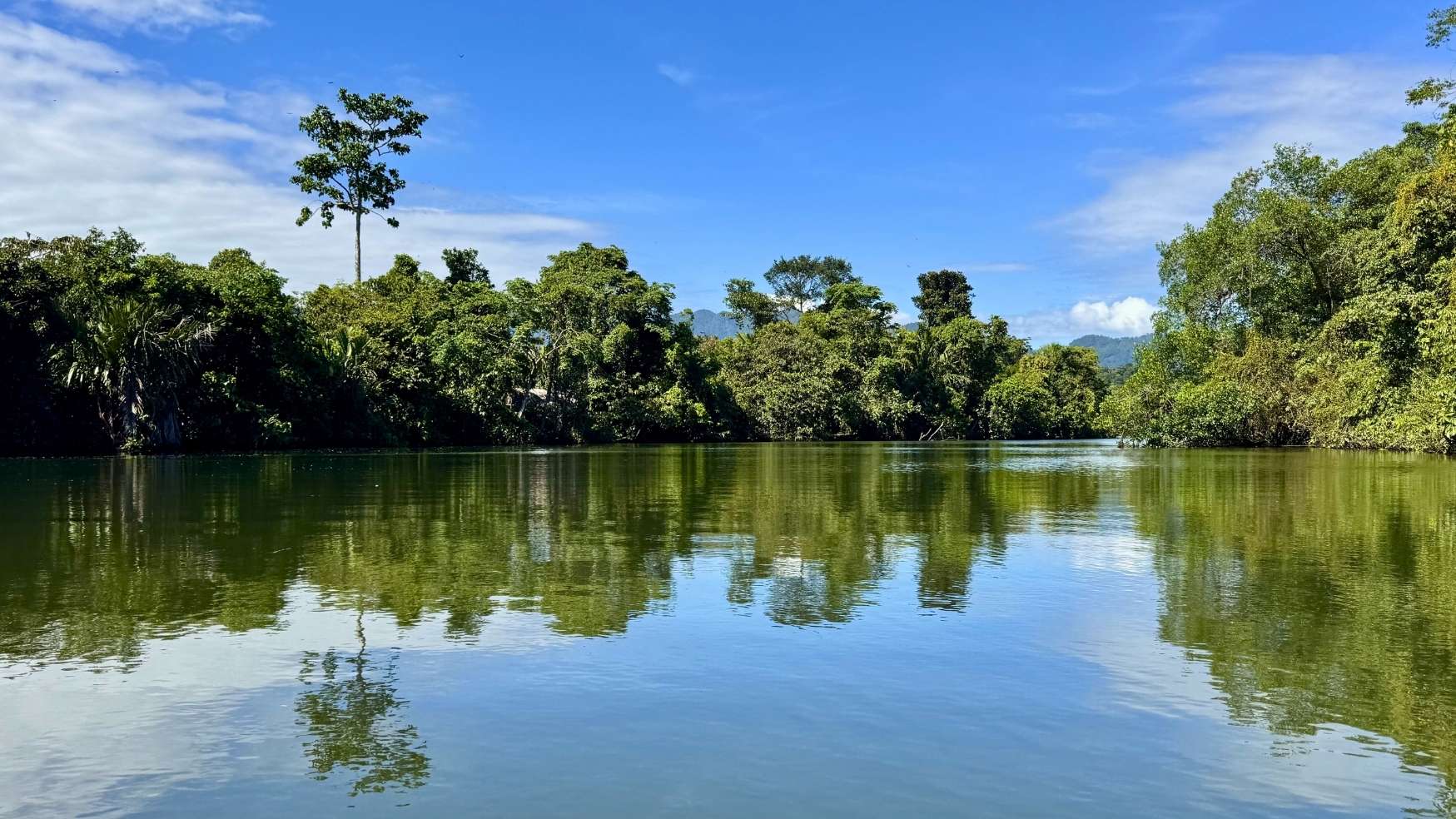
On the Pacific side, the Santa María River stands out as the third largest in Panama. Flowing from the misty ridges of the park, it becomes the backbone of agriculture in Veraguas, sustaining orange groves, small fincas, and downstream hydroelectric plants before reaching the Gulf of Parita. Along its banks, campesino families have lived for generations, depending on its fertile floodplains for their livelihoods.
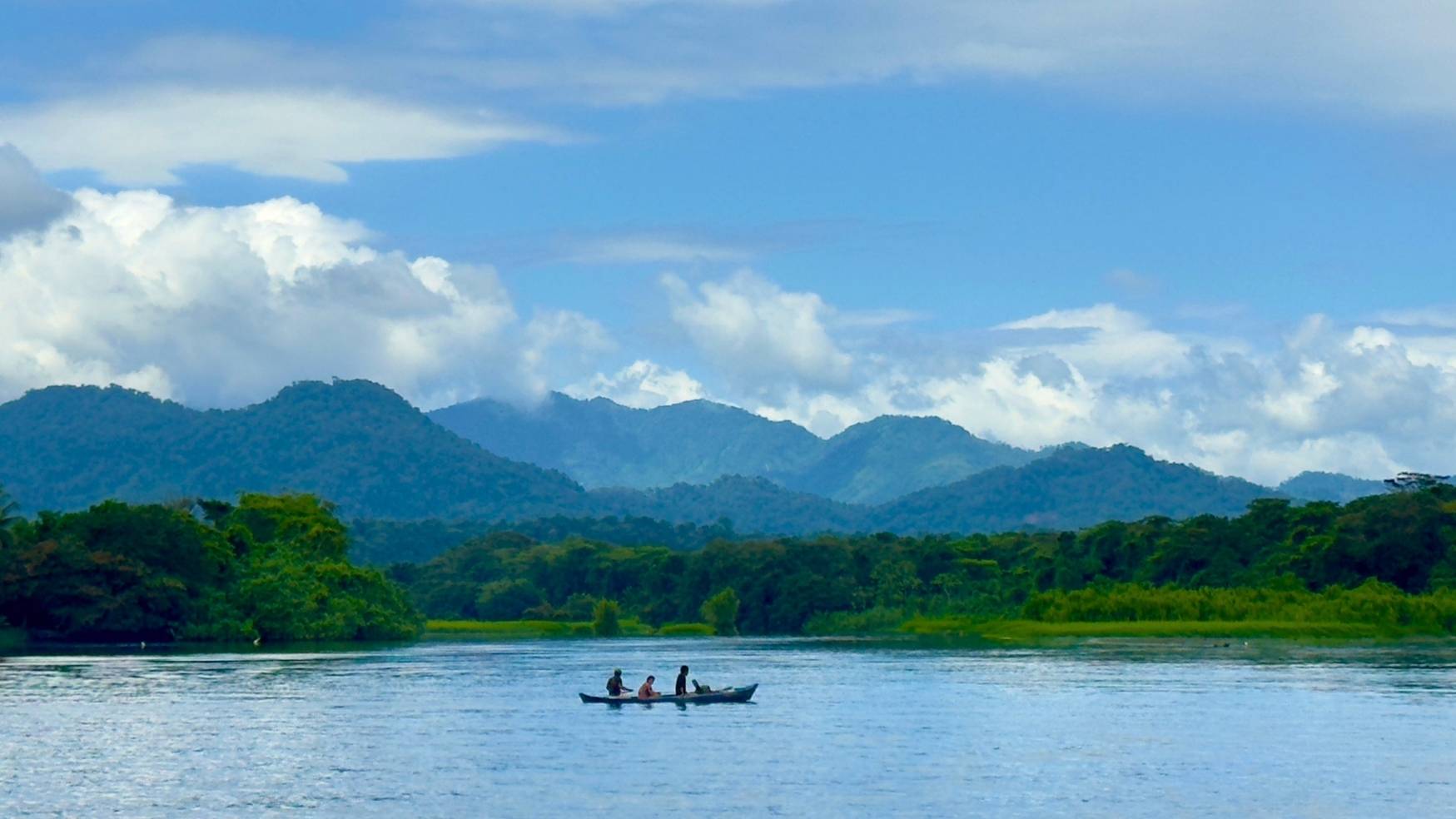
On the Caribbean side, rivers such as the Calovébora and Coclé del Norte descend through steep valleys into remote coastal communities. These waterways are less developed but no less vital, carrying sediments and nutrients that sustain mangroves, fisheries, and coral ecosystems. For Indigenous Ngäbe-Buglé villages, these rivers are both transport routes and sources of fresh water in landscapes where roads remain scarce.
Protecting Santa Fe’s watersheds means protecting life downstream, whether it’s the campesinos who cultivate crops along the Santa María, or coastal families who rely on healthy fisheries fed by northern rivers. The park’s rivers are, in many ways, the most tangible reminder that conservation here safeguards not just forests, but the entire web of human and ecological communities connected to them.
For birdwatchers, Santa Fe is a paradise still off the radar. Unlike hotspots near the Canal Zone, the trails here remain quiet, and encounters feel unhurried. Dawn brings a chorus of motmots, tanagers, and oropendolas. On mist-covered mornings, you may glimpse a quetzal feeding in the cloud forest; on brighter days, toucans drift across open valleys with ease.
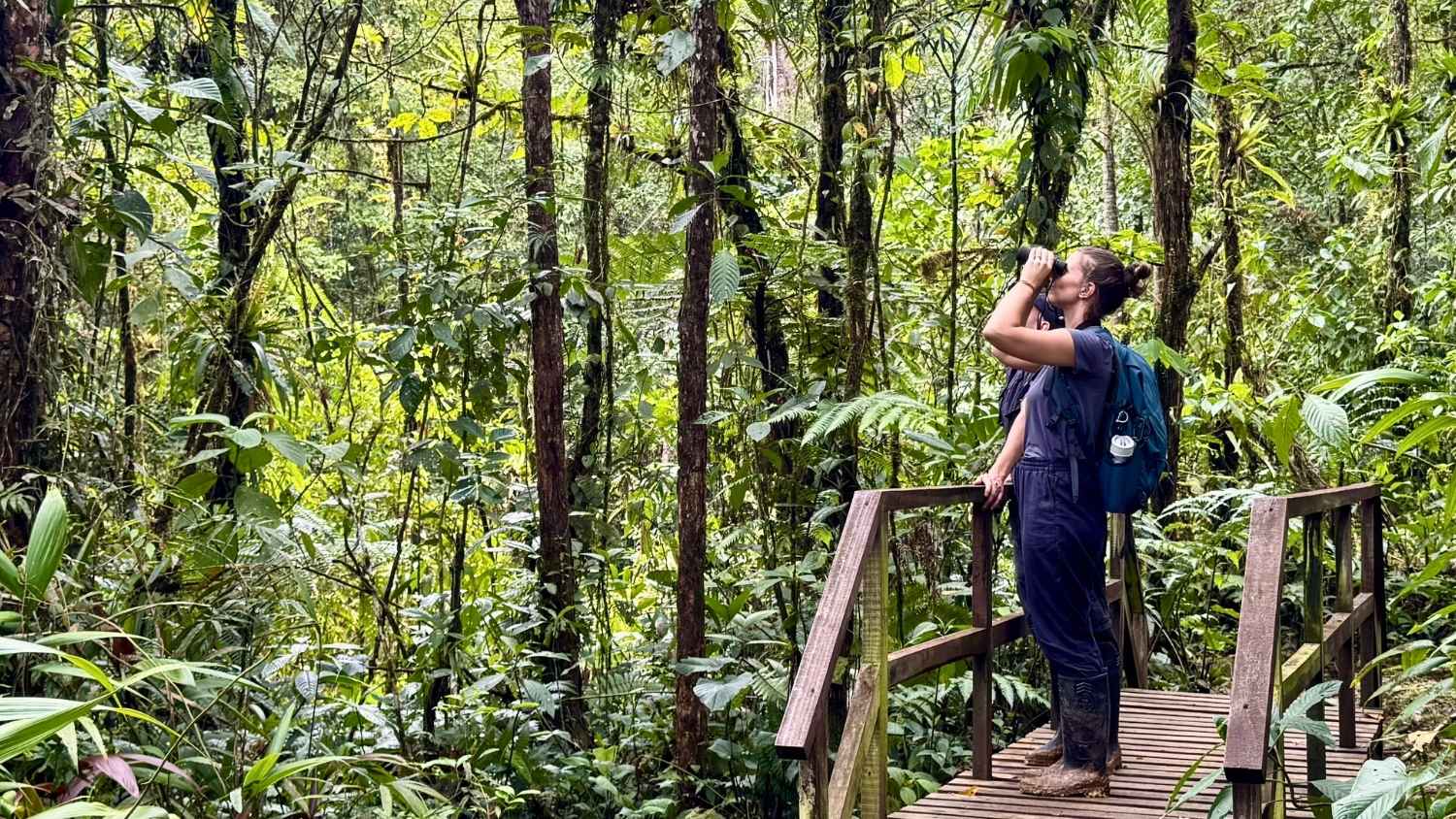
Migration seasons add another rhythm, as northern species pass through in the late wet season. Yet the real magic is not just the numbers, it’s the intimacy. In Santa Fe, birds are not distant checkmarks in a notebook but companions on the path. Hummingbirds dart around camp kitchens, parrots cross over garden edges, and the forest feels close enough to touch.
Want to dive deeper? Read our full article on Birdwatching in Panama for a detailed look at habitats, species, and seasonal tips.
Ready to experience it yourself? Book your Birdwatching activity with Yodavida and discover why Santa Fe is one of Panama’s most rewarding birding destinations.
Santa Fe National Park is not yet a fully developed hiking destination. There are no marked trails, no signs, and no visitor facilities like those you might find elsewhere. This makes the park raw and authentic but also challenging. In our experience, whether you are a beginner or an experienced hiker, going with local guides is essential. The terrain is wild, and the park borders the Comarca Ngäbe-Buglé, where Indigenous communities live by their own traditions. Entering without guidance can create misunderstandings, so we always recommend traveling with guides who know both the land and the culture.
At Yodavida, hiking is not about speed or ticking off peaks. It’s the way we reach something meaningful: a hidden waterfall, a pristine river pool, a high ridge without human trace, or a farming community living in the hills. Sometimes the trail calls for silence, other times for shared stories but always for respect.
Want to discover the hikes we’ve developed? Check our full list of hiking activities in Santa Fe National Park
Santa Fe National Park is not just forest and rivers, it is also a living cultural landscape. The park borders the Comarca Ngäbe-Buglé, home to Panama’s largest Indigenous community.
The comarca has its own rules, authorities, and traditions. Outsiders cannot simply enter; access requires permission from the local cacique (chief authority). This means that moving respectfully, and always with guidance, is the only way to honor both the land and its people.
If you have any doubts about routes, seasons, permits, or how to approach travel in this region, just tap the WhatsApp icon on our site. We’ll be happy to help you plan, connect you with certified guides, and make sure your journey through Santa Fe National Park is meaningful, safe, and respectful.
And if you’d like to combine your hike with a stay in nature, Camping La Mula is ready to welcome you! Nestled by the river, it’s the perfect basecamp for exploring the park at your own pace.