
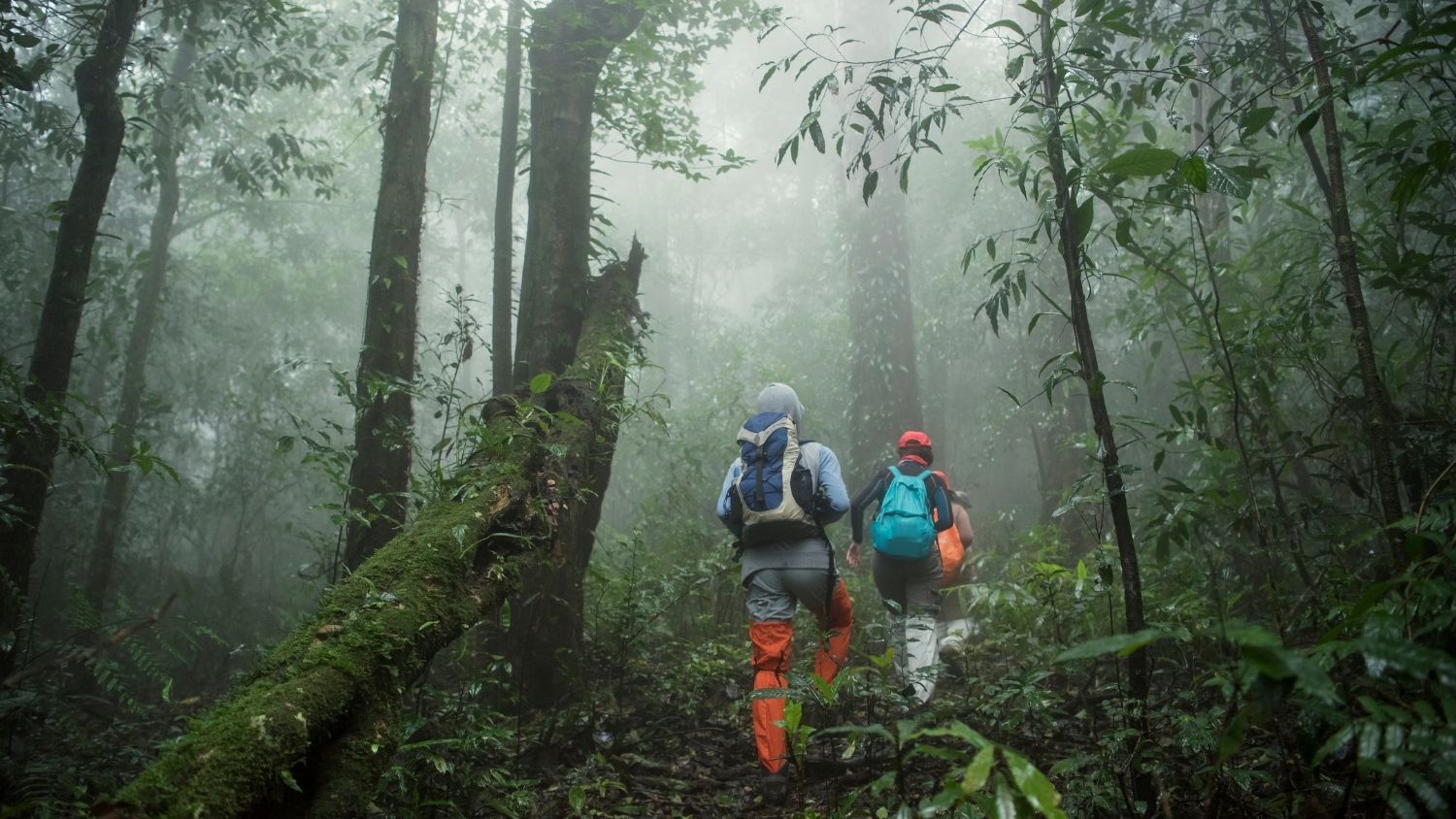
The Weather in Panama is one of the country’s most defining features. Warm temperatures, abundant rain, and lush landscapes make it a land where biodiversity thrives year-round. Yet, with so many microclimates, the experience of Panama’s weather changes drastically depending on where you go, from the dry Pacific lowlands to the humid Caribbean coast and from hot city streets to the cool cloud forests of the highlands.
For travelers, understanding Panama’s weather is essential. Whether you’re heading for sunny beaches, mountain hikes or jungle adventures, knowing what to expect will help you plan better, pack smarter and fully enjoy the country’s natural beauty.
And for those exploring the trails of Santa Fe National Park with Yodavida, being prepared for the local climate can make your adventure safer, smoother and far more rewarding.
Despite its small size, Panama ranks among the top ten rainiest countries in the world, averaging nearly 3,000 mm of rainfall annually. This rain feeds the forests, rivers, and wildlife that make Panama such a hotspot for biodiversity. It also ensures that the country stays green all year, even when other parts of Central America turn brown during the dry months.
Panama's climate has two main seasons, understanding it helps you navigate these seasons effectively:
Temperatures stay warm year-round—averaging 31–33 °C (88–92 °F) during the day at sea level and 23–25 °C (73–77 °F) at night.
In the highlands, like Santa Fe and Boquete, days are cooler around 24–25 °C (75–77 °F) and nights can dip into the 18–20 °C (60 °F ), offering refreshing relief from coastal heat.
This consistency in temperature is a key part of the Weather in Panama and contributes to the country's appeal. One advantage for travelers: Panama lies outside the hurricane belt. While it experiences heavy rains, it rarely faces direct tropical cyclones, making travel less risky compared to some Caribbean destinations.
Because of its unique geography, Panama’s weather shifts dramatically from region to region. Here’s a snapshot of the main zones:
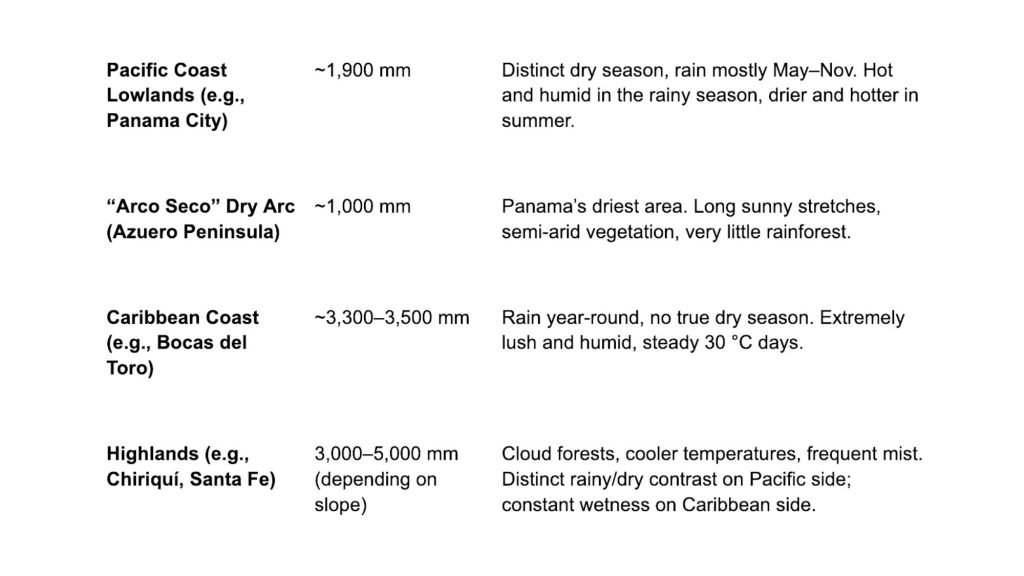
This means a traveler can go from dry savannas to dripping rainforests within a couple of hours’ drive. It’s one of Panama’s great strengths: diversity packed into a small country.
The weather in Panama underpins its identity as a biological bridge between North and South America. Rainforests, mangroves and cloud forests flourish because of the reliable mix of sunshine and rain. As a result, the country harbors more than 10,000 species of plants and over 1,000 species of birds, making it one of the most biodiverse regions in the world.
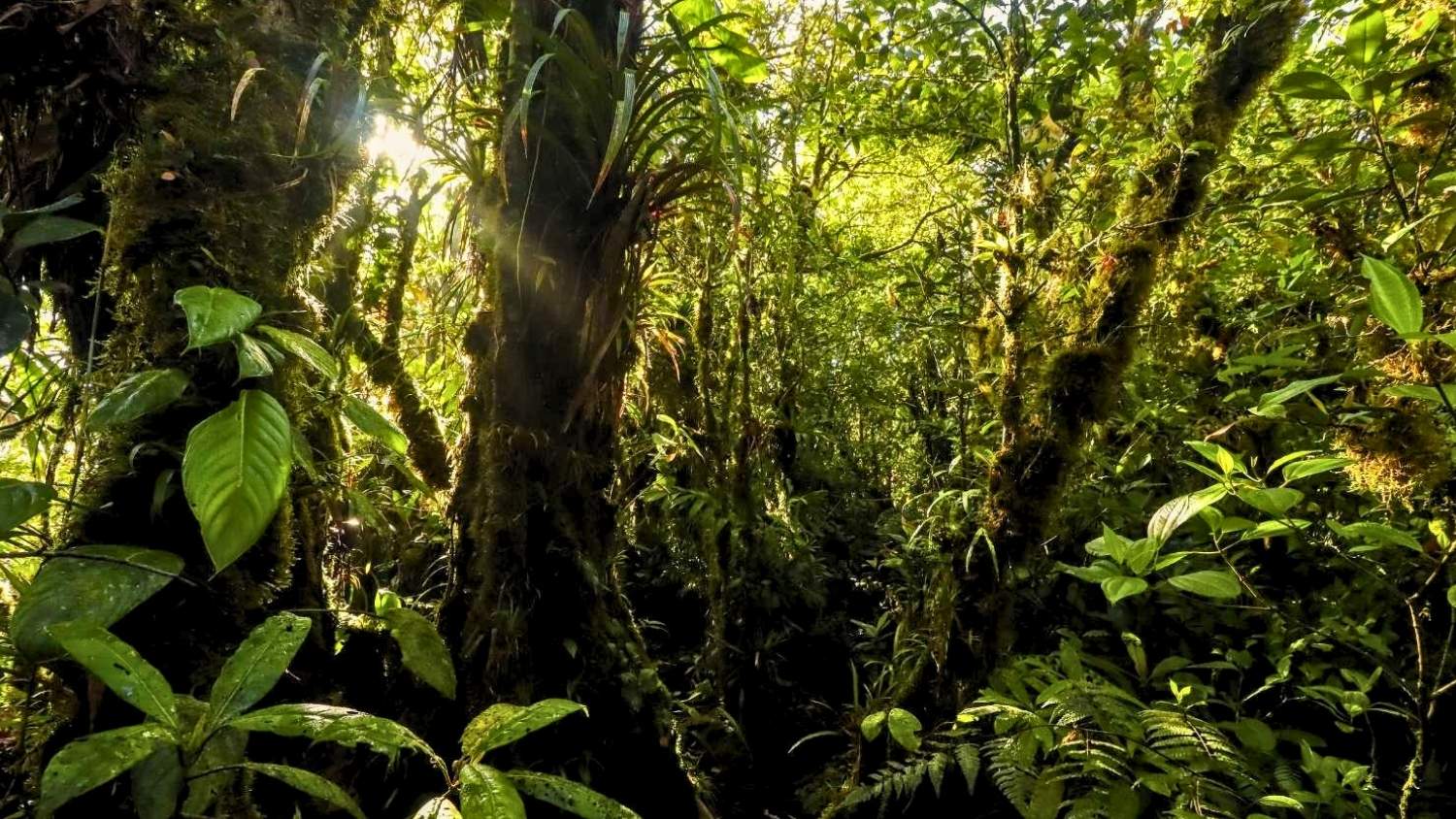
From the orchids in cloud forests to frogs along riverbanks, the ecosystems here are living proof of how rainfall sustains life. Santa Fe National Park alone protects hundreds of orchid species, Baird’s tapirs, jaguars, and nearly 300 bird species, many of them rare or endangered. Without the rain, there would be no waterfalls, no lush valleys, and no such explosion of life.
In Veraguas highlands, weather is as much a part of the experience as the scenery. The town of Santa Fe, sitting at about 430 meters above sea level, enjoys mild temperatures all year. Days average around 24-25 °C, while nights cool down pleasantly, making it one of Panama’s most comfortable climates.
Rainfall here is around 2,200 mm annually, with a clear dry season from January to March and heavy rains in September and October. The rains bring life to the region’s countless waterfalls, rivers, and lush forests.

The Veraguas province straddles the Continental Divide, so its climate changes as you cross from the Pacific side to the Caribbean slopes. On the Caribbean side, the weather is much wetter, with rain almost year-round. This explains why the park is so rich in biodiversity, two climates overlap, creating habitats for species from both coasts.
Exploring Santa Fe’s mountains requires respect for the elements. Conditions can change quickly: rivers rise after rain, ridges cloud over, and trails turn muddy.
Preparation is key. Practical tips include:
At Yodavida, our certified local guides know how to read the rivers, clouds, and terrain. If you’re unsure which activity matches your comfort level, just chat with us on WhatsApp and we’ll help organize the right outing for you.
Santa Fe Veraguas is not yet a fully developed hiking destination. Trails are unmarked, signage is absent and rules overlap with the neighboring indigenous region, the Ngäbe-Buglé Comarca, where entry requires permission from local authorities. For this reason, we strongly recommend exploring with our local certified guides.
At Yodavida, we’re helping shape Santa Fe into a sustainable hiking destination, always in collaboration with the park office and communities. For us, hiking is about the journey, whether reaching a waterfall, crossing rivers or walking in silence through virgin mountains where only wildlife has passed.
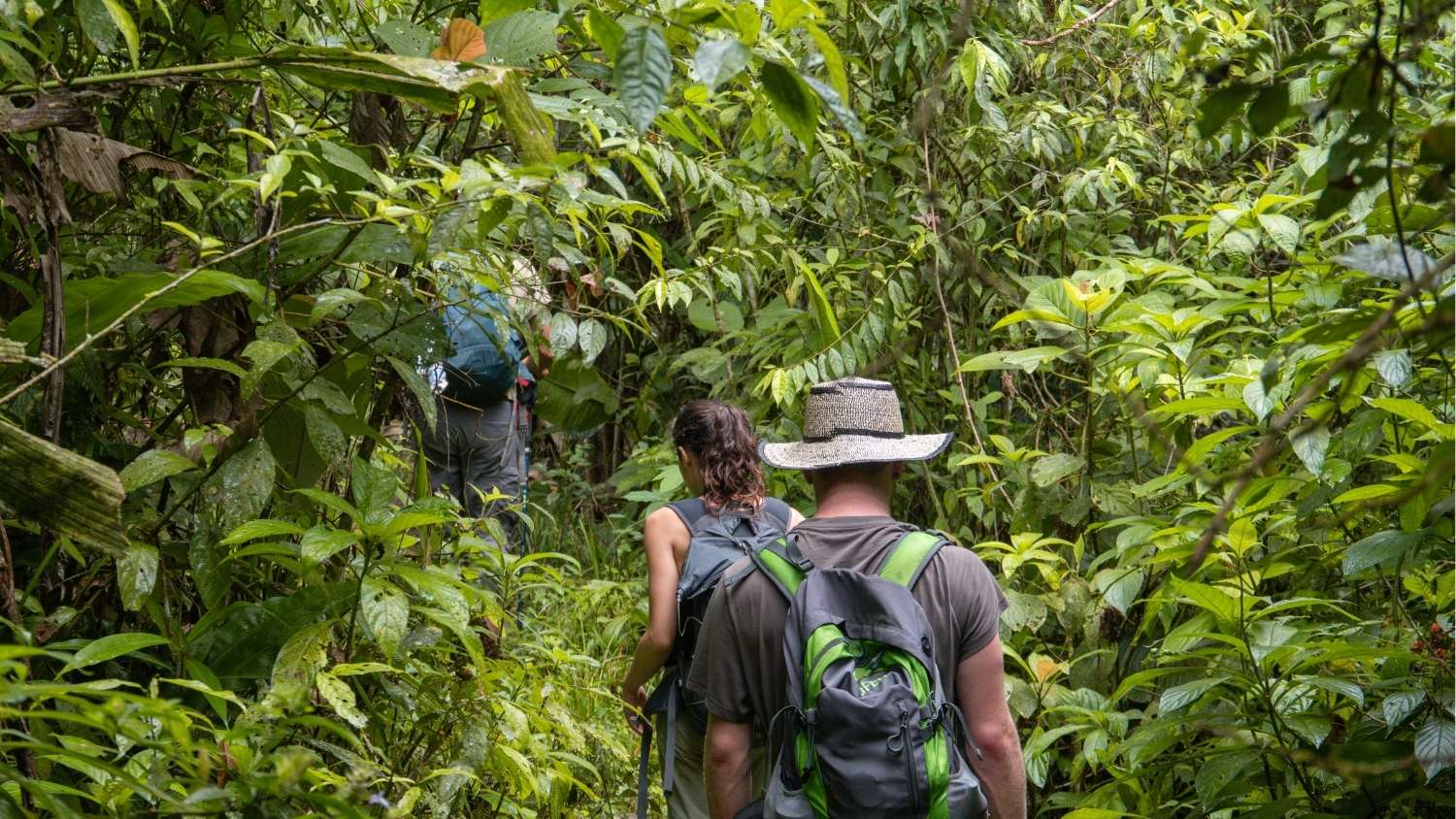
Our range of activities experiences include:
We’re also developing multi-day treks, to allow travelers to sleep under the stars while respecting fragile ecosystems.
Ready to plan your adventure? Click the WhatsApp icon, together we’ll match you with the right hike, the right guide and the right pace.
The weather in Panama can be intense, but it is also what makes the country extraordinary. In Santa Fe, rain and mist nurture the forests, fill the rivers and keep biodiversity alive. Visitors play their part by walking gently, respecting community rules and costume, and hiring local guides who ensure safe, responsible experiences.
For us at Yodavida, every season offers something unique. Whether it’s waterfalls in full flow, birds migrating through cloud-wrapped ridges or a sunrise above the Santa María River at Camping La Mula. Rain or shine, Santa Fe invites travelers into its rhythm.